

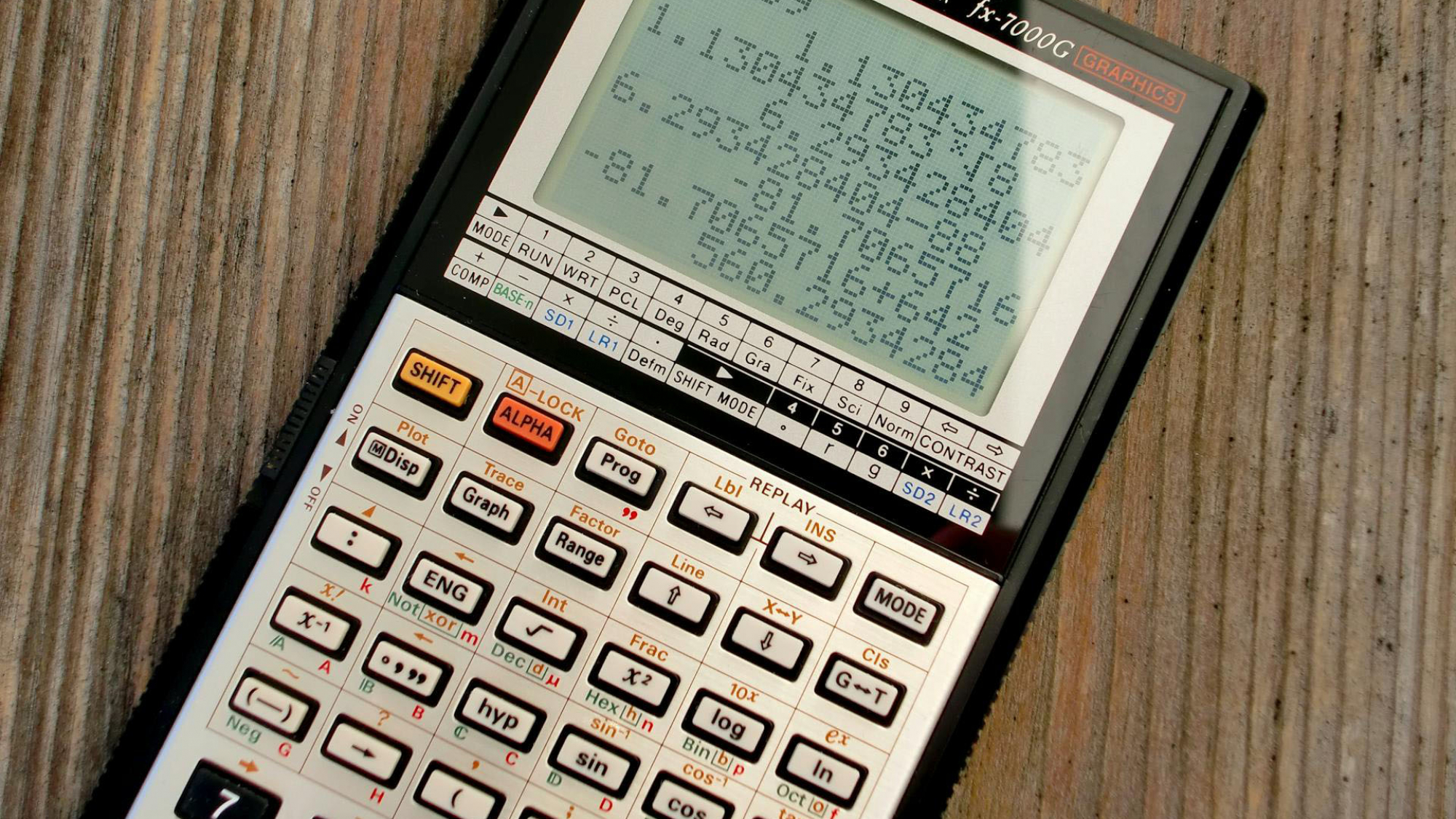
Fractions trip up a lot of people — but once you know the four simple rules, they’re easy. This guide walks through how to add, subtract, multiply, and divide fractions, how to simplify them, and how to handle mixed numbers, with clear examples for each. For instant answers that show every step, use our free Fraction Calculator.
Fraction Basics
A fraction has two parts: the numerator (top) and the denominator (bottom). The denominator tells you how many equal parts make a whole; the numerator tells you how many you have. So 3/4 means three of four equal parts. A proper fraction is less than 1 (like 2/5), an improper fraction is 1 or more (like 7/4), and a mixed number combines a whole number and a fraction (like 1¾).
How to Add Fractions
You can only add fractions that share the same denominator. If they’re different, give them a common denominator first:
a/b + c/d = (a·d + c·b) ÷ (b·d), then simplify.
Example: 1/2 + 1/3. The common denominator is 6, so rewrite as 3/6 + 2/6 = 5/6. Same-denominator fractions are easy — just add the tops: 1/5 + 2/5 = 3/5.
How to Subtract Fractions
Subtraction works exactly like addition — get a common denominator, then subtract the numerators:
Example: 3/4 − 1/3 = 9/12 − 4/12 = 5/12.
How to Multiply Fractions
Multiplying is the simplest — no common denominator needed. Multiply straight across:
a/b × c/d = (a·c) ÷ (b·d), then simplify.
Example: 2/3 × 3/4 = 6/12 = 1/2. Tip: you can cancel common factors before multiplying to keep the numbers small.
How to Divide Fractions
To divide, use “keep, change, flip” — keep the first fraction, change ÷ to ×, and flip (invert) the second:
a/b ÷ c/d = a/b × d/c
Example: 1/2 ÷ 1/4 = 1/2 × 4/1 = 4/2 = 2. Dividing by a fraction smaller than 1 makes the answer bigger, which surprises people at first — but it’s correct.
How to Simplify Fractions
Simplifying means reducing a fraction to its smallest equivalent form by dividing the top and bottom by their greatest common divisor (GCD). For 8/12, the GCD is 4: 8 ÷ 4 = 2 and 12 ÷ 4 = 3, giving 2/3. Always simplify your final answer — 2/3 is much cleaner than 8/12, even though they’re equal.
Mixed Numbers and Improper Fractions
To turn a mixed number into an improper fraction, multiply the whole number by the denominator and add the numerator: 1¾ = (1 × 4 + 3)/4 = 7/4. To go back, divide: 7 ÷ 4 = 1 remainder 3, so 7/4 = 1¾. Do your calculations as improper fractions, then convert the answer back to a mixed number if you prefer — which the calculator does automatically.
Converting Fractions to Decimals
To convert any fraction to a decimal, just divide the numerator by the denominator: 3/4 = 3 ÷ 4 = 0.75. Some common ones worth knowing: 1/2 = 0.5, 1/4 = 0.25, 1/3 = 0.333…, 1/8 = 0.125. The calculator shows the decimal alongside every answer.
Where You’ll Actually Use Fractions
- Cooking & baking: halving or doubling a recipe (¾ cup × 2 = 1½ cups).
- Woodworking & DIY: measurements in inches are full of fractions.
- Sewing & crafts: seam allowances and pattern scaling.
- School & exams: the foundation for algebra, ratios, and probability.
Frequently Asked Questions
How do I add fractions with different denominators?
Give them a common denominator, then add the numerators. 1/2 + 1/3 = 3/6 + 2/6 = 5/6. The calculator does this and shows the steps.
How do I divide fractions?
Keep the first fraction, change divide to multiply, and flip the second. 1/2 ÷ 1/4 = 1/2 × 4/1 = 2.
How do I simplify a fraction?
Divide the top and bottom by their greatest common divisor. 8/12 ÷ 4 = 2/3.
What is a mixed number?
A whole number plus a fraction, like 2⅓. It equals the improper fraction 7/3.
How do I turn a fraction into a decimal?
Divide the numerator by the denominator. 5/8 = 5 ÷ 8 = 0.625.
Solve Any Fraction Instantly
Stop second-guessing the steps. Our free Fraction Calculator adds, subtracts, multiplies, and divides fractions and mixed numbers, simplifies the answer, shows it as a decimal, and lays out every step — all in your browser, no sign-up. Pair it with our Percentage Calculator, Grade Calculator, and GPA Calculator, or explore the full set of free online calculators.
More Free Calculators from BSM Sites
- Percentage Calculator
- Grade Calculator
- GPA Calculator
- Dice Probability Calculator
- Age Calculator
- Age Difference Calculator
- Date Calculator
- Time Calculator
- Hours Calculator
- Sleep Calculator
- Dog Age Calculator
- Cat Age Calculator
- Pregnancy Due Date Calculator
- Ovulation Calculator
- Water Intake Calculator
- BMI Calculator
- Body Fat Calculator
- Calorie Calculator
- TDEE Calculator
- BMR Calculator
- Macro Calculator
- Pace Calculator
- VAT & GST Calculator
- Sales Tax Calculator
- Discount Calculator
- Tip Calculator
- Salary Calculator
- Salary Raise Calculator
- Net Worth Calculator
- Rent vs Buy Calculator
- Paycheck Calculator
- Mortgage Calculator
- Mortgage Payment Calculator
- Loan Calculator
- Loan EMI Calculator
- Compound Interest Calculator
- Debt Payoff Calculator
- Retirement Calculator
- Fuel Cost Calculator
- Square Footage Calculator
- Concrete Calculator
- Palworld Breeding Calculator
Add a Comment