

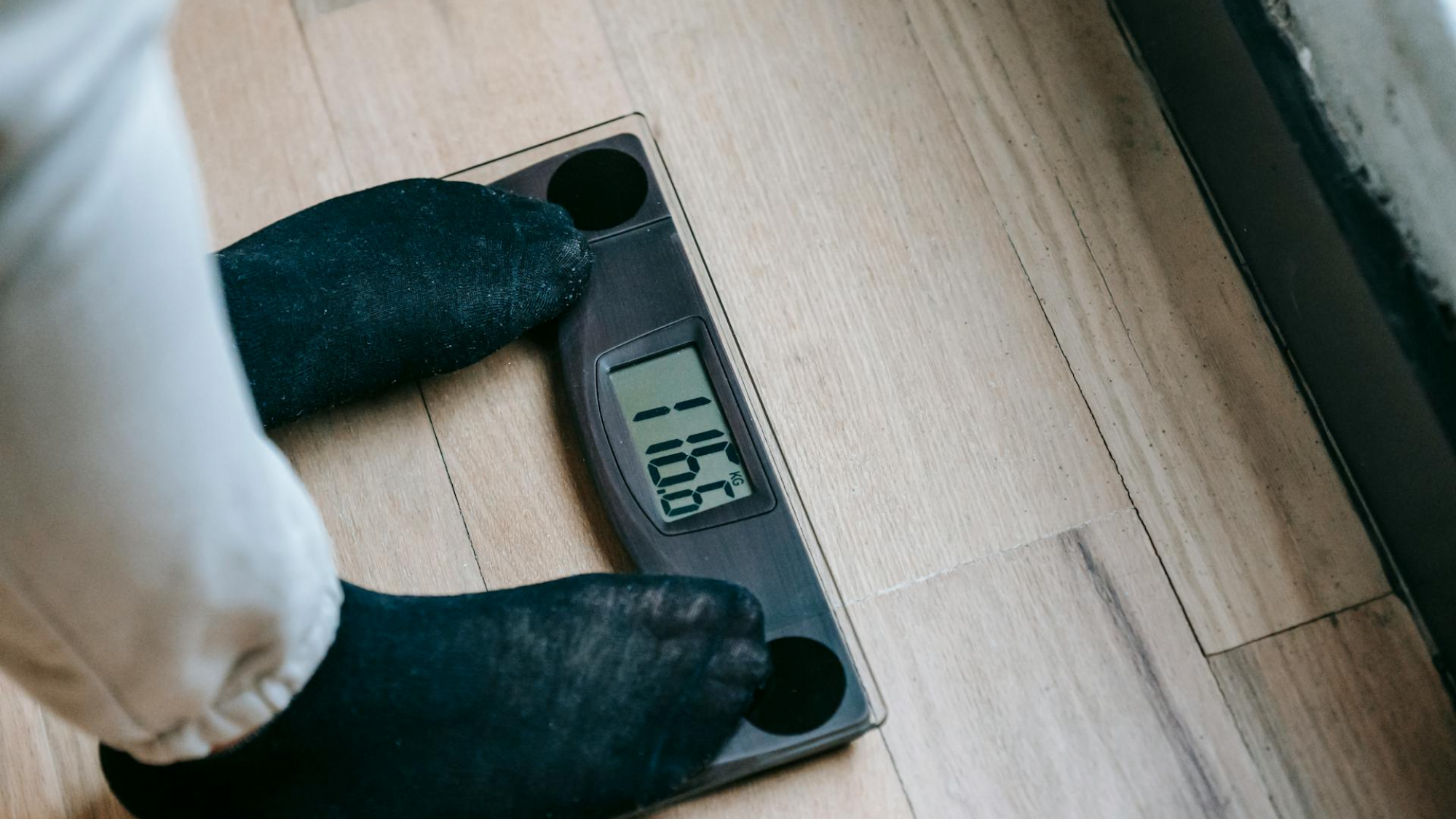
BMI tells you how heavy you are for your height. Body fat percentage tells you what that weight is actually made of — and for most people chasing a fitness goal, that’s the number that matters. This guide shows you how to calculate body fat two ways at home, how to read the men’s and women’s charts, how to turn the result into fat mass and lean mass, and how accurate it all really is. For instant numbers, use our free Body Fat Calculator.
The Two At-Home Body Fat Formulas
You don’t need a lab to get a useful estimate. The two most popular at-home methods are the U.S. Navy tape method and the BMI (Deurenberg) method.
U.S. Navy method — uses tape-measure circumferences plus height (all in cm):
Men: BF% = 495 ÷ [1.0324 − 0.19077·log₁₀(waist − neck) + 0.15456·log₁₀(height)] − 450
Women: BF% = 495 ÷ [1.29579 − 0.35004·log₁₀(waist + hip − neck) + 0.22100·log₁₀(height)] − 450
BMI method — when you don’t have a tape, estimate from BMI, age and sex:
BF% = 1.20 × BMI + 0.23 × age − 10.8 × sex − 5.4 (sex = 1 for men, 0 for women)
Know your measurements and you can run either by hand — or skip the math and let the calculator do all of it.
Worked example — Navy method (man)
A man who is 178 cm tall with a 38 cm neck and an 84 cm waist: waist − neck = 46. Dropping that into the men’s formula gives roughly 15.7% body fat, which sits in the “fitness” range.
Worked example — Navy method (woman)
A woman who is 165 cm tall with a 31 cm neck, 68 cm waist and 93 cm hips: waist + hip − neck = 130. The women’s formula returns about 23.3% body fat — also in the “fitness” range, because women’s healthy ranges run higher than men’s.
Worked example — BMI method
A 30-year-old man, 178 cm and 78 kg, has a BMI of 24.6. The BMI method gives 1.20 × 24.6 + 0.23 × 30 − 10.8 − 5.4 ≈ 20.2% body fat. Notice it lands a few points higher than the tape result — that’s the normal gap between methods, which is why you should pick one and stick with it.
Body Fat Percentage Chart (Men & Women)
The American Council on Exercise (ACE) describes these general bands — and they’re the numbers worth memorising:
- Essential fat: men 2–5%, women 10–13%
- Athletes: men 6–13%, women 14–20%
- Fitness: men 14–17%, women 21–24%
- Average / acceptable: men 18–24%, women 25–31%
- Obese: men 25%+, women 32%+
Women naturally carry more essential fat than men for hormonal and reproductive reasons, so a “healthy” figure for a woman is several points higher than for a man at the same fitness level. Comparing a man’s number to a woman’s chart (or vice versa) is the most common mistake people make.
Fat Mass vs Lean Mass — What the Numbers Mean
Once you know your body fat percentage, two more useful numbers fall out of it:
Fat mass = weight × body fat %
Lean mass = weight − fat mass
For that 78 kg man at 20.2%, fat mass is about 15.8 kg and lean mass about 62.2 kg. Tracking lean mass over time is the real prize: it tells you whether a change in weight came from fat or from muscle — something the scale alone can never show you. Our Body Fat Calculator displays both automatically when you enter your weight.
How to Measure Yourself Correctly
The Navy method is only as good as your tape work — sloppy measurements are the number-one source of error. Use a flexible cloth or fibreglass tape, keep it snug but not digging in, and measure on bare skin first thing in the morning:
- Neck: just below the larynx (Adam’s apple), with the tape sloping slightly downward to the front.
- Waist (men): across the navel, standing relaxed — don’t suck in.
- Waist (women): at the narrowest point of the torso.
- Hips (women): around the widest part of the buttocks.
Take each measurement two or three times and use the average. Always re-measure under the same conditions so your trend line stays honest.
Body Fat % vs BMI — Which Should You Use?
BMI is fast and needs only a scale, but it can’t tell muscle from fat. A lifter and someone carrying excess fat can share an identical BMI while looking and performing completely differently. Body fat percentage looks past total weight to your composition, so it isn’t fooled by muscle — which is exactly why athletes and anyone doing a “recomp” prefer it. The trade-off: body fat is harder to measure precisely, so the estimate carries more uncertainty. Most people get the best picture by checking both. Compare yours with our BMI Calculator to see the difference for yourself.
How Accurate Are These Methods?
Treat any at-home number as a ballpark, not gospel. The Navy and BMI methods typically land within about 3–4 percentage points of a lab measurement, and both lose accuracy at the extremes — very lean or very muscular bodies, and the very overweight. The gold standards are a DEXA scan or hydrostatic (underwater) weighing, with calipers and bioelectrical scales somewhere in between. The good news: even an imperfect method is excellent at tracking change, as long as you measure the same way every time.
Improving Your Body Composition
If you want to shift the ratio of fat to muscle, the fundamentals beat any gadget or hack:
- Strength train. Building or keeping muscle is what lowers body fat percentage even when the scale barely moves.
- Prioritise protein and whole foods. Adequate protein supports muscle; plan it with our Macro Calculator.
- Know your energy needs. Our TDEE and Calorie calculators show your daily burn so changes are gradual, not extreme.
- Sleep and stay consistent. Recovery and steady habits move the needle far more than crash efforts.
- Track the trend, not the day. Re-measure every few weeks and watch the direction over time.
And if a number ever starts to feel like a source of stress rather than a useful signal, that’s the moment to talk to a doctor or registered dietitian rather than push harder alone.
Frequently Asked Questions
How do I calculate body fat without calipers or a scan?
Use the U.S. Navy tape method — neck and waist for men, plus hips for women, together with your height. It's free, repeatable at home, and reasonably accurate for most people.
What's the most accurate way to measure body fat at home?
The Navy tape method tends to beat cheap bioelectrical scales for consistency, especially if you average a few careful measurements. For true accuracy, a DEXA scan is the gold standard.
What body fat percentage is healthy?
It depends on sex. General fitness ranges are about 14–17% for men and 21–24% for women, with "average/acceptable" a little higher. These are guides, not targets — context matters more than any single number.
Is body fat percentage more useful than BMI?
For many people, yes, because it reflects composition rather than just weight versus height. The downside is that it's harder to measure precisely, so plenty of people track both together.
How often should I re-measure?
Every two to four weeks is plenty. Body fat changes slowly, and measuring more often just adds noise from day-to-day fluctuations in water and food.
Calculate Your Body Fat Instantly
Skip the logarithms. Our free Body Fat Calculator runs both the Navy and BMI methods, shows your percentage, category, fat mass and lean mass, places you on a sex-specific scale, and works in metric or imperial — all in your browser with no sign-up. Pair it with our BMI, TDEE, Calorie and Macro calculators, or explore the full set of free online calculators.
More Free Calculators from BSM Sites
- BMI Calculator
- Calorie Calculator
- TDEE Calculator
- BMR Calculator
- Macro Calculator
- Pace Calculator
- Ovulation Calculator
- Pregnancy Due Date Calculator
- Time Calculator
- Hours Calculator
- Date Calculator
- Age Calculator
- Percentage Calculator
- Concrete Calculator
- Square Footage Calculator
- Loan Calculator
- Mortgage Calculator
- Mortgage Payment Calculator
- Loan EMI Calculator
- Compound Interest Calculator
- Debt Payoff Calculator
- Retirement Calculator
- Paycheck Calculator
- Sales Tax Calculator
- Discount Calculator
- Tip Calculator
- Fuel Cost Calculator
- Grade Calculator
- GPA Calculator
- Palworld Breeding Calculator
Add a Comment