

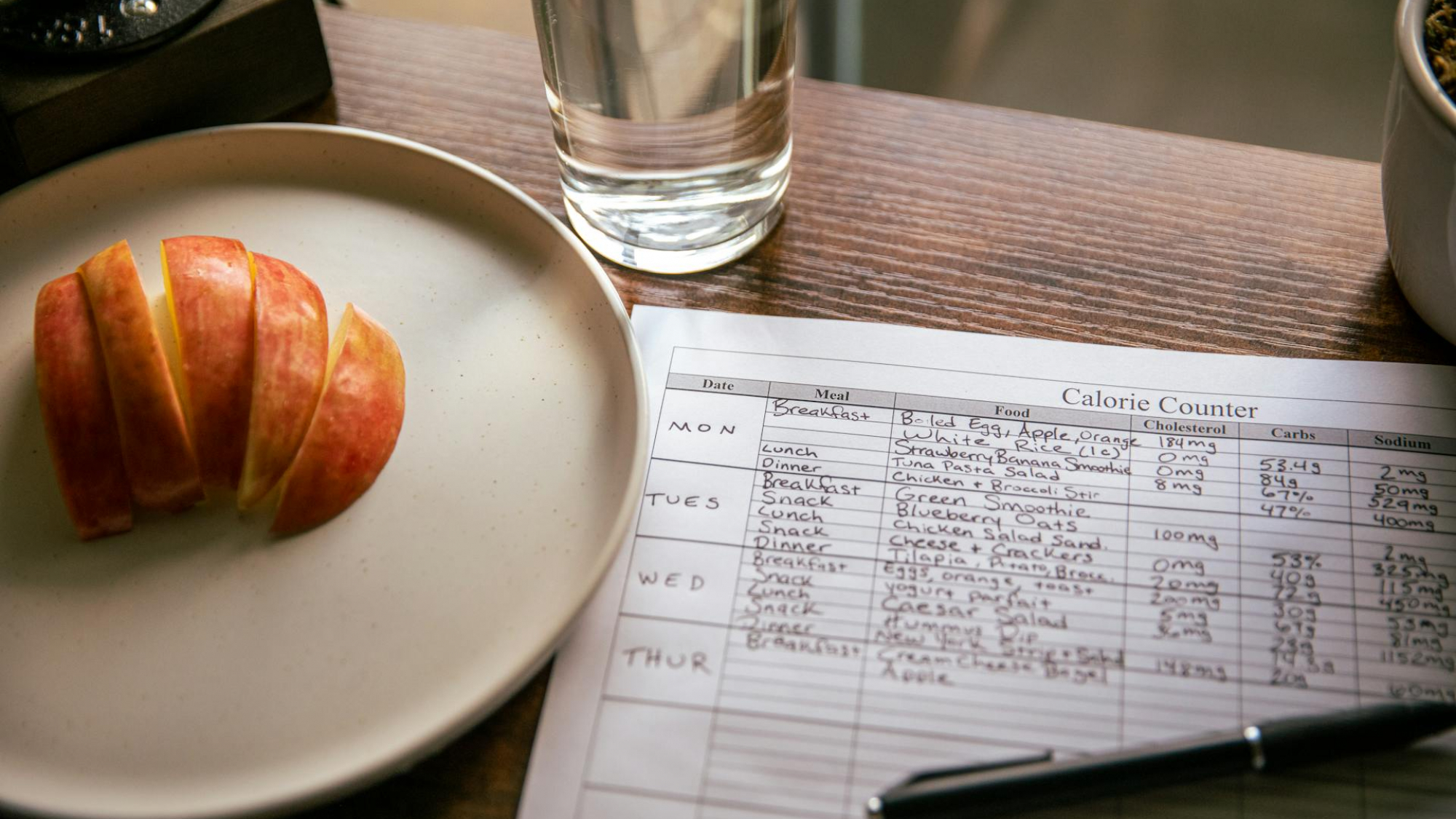
Calorie Calculator 2026: How Many Calories Should You Eat to Lose, Maintain or Gain Weight
“How many calories should I eat a day?” might be the single most-googled health question on the internet. The honest answer: it depends on your age, sex, height, weight, activity level and goal — and you need a proper calorie calculator to find the right number.
This guide walks you through everything: what BMR and TDEE actually mean, the three calorie formulas that matter (and which one is most accurate), how to set a sustainable calorie deficit for weight loss, how to plan a clean bulk for muscle gain, the right macro split for your goal, and the most common mistakes people make when counting calories.
What Is a Calorie Calculator?
A calorie calculator estimates how many calories your body needs per day to maintain its current weight, lose fat, or gain muscle. The best calculators give you three numbers:
- BMR (Basal Metabolic Rate) — calories burned at complete rest
- TDEE (Total Daily Energy Expenditure) — calories burned per day including activity
- Daily target — calories to eat for your specific goal
A great calorie calculator also splits your target into macros — protein, carbs and fat — because not all calories build the same body. 1,800 calories of protein and vegetables produces a very different result than 1,800 calories of pizza.
How Many Calories Should I Eat Per Day?
The general adult ranges, from the US Dietary Guidelines:
| Demographic | Sedentary | Moderately Active | Active |
|---|---|---|---|
| Women 19–30 | 1,800–2,000 | 2,000–2,200 | 2,400 |
| Women 31–50 | 1,800 | 2,000 | 2,200 |
| Women 51+ | 1,600 | 1,800 | 2,000–2,200 |
| Men 19–30 | 2,400–2,600 | 2,600–2,800 | 3,000 |
| Men 31–50 | 2,200–2,400 | 2,400–2,600 | 2,800–3,000 |
| Men 51+ | 2,000–2,200 | 2,200–2,400 | 2,400–2,800 |
These are averages. To get your exact number, use the calculator above — it accounts for your specific weight, height, age, sex and activity level.
BMR vs. TDEE — Which Number Actually Matters?
These two terms get confused constantly, but they’re very different:
BMR — Basal Metabolic Rate
BMR is the calories your body burns at complete rest, just to keep your organs working. If you lay in bed all day in a temperature-controlled room doing absolutely nothing, this is the energy your body would still burn. For most adults, BMR is between 1,200 and 2,000 calories per day, and it accounts for roughly 60–70% of your total daily calorie burn.
TDEE — Total Daily Energy Expenditure
TDEE is BMR multiplied by an “activity factor” that accounts for everything else: walking to your car, working at your desk, going to the gym, fidgeting, even digesting food. TDEE is the number you actually need to eat to maintain your current weight.
The math is simple:
TDEE = BMR × Activity Multiplier
If your BMR is 1,500 and you’re moderately active (multiplier 1.55), your TDEE is 2,325 calories. Eat 2,325 calories per day, your weight stays the same. Eat 1,825, you lose about 1 pound per week. Eat 2,575, you gain about 0.5 pound per week.
The Three Calorie Formulas — Which One Is Most Accurate?
Scientists have spent over a century developing formulas to estimate BMR from body measurements. Three are worth knowing:
1. Mifflin-St Jeor Equation (1990) — Use This One
The current gold standard. Published in 1990, validated against thousands of measurements, and adopted by the American Dietetic Association as the most accurate formula for the general adult population:
Men: BMR = (10 × kg) + (6.25 × cm) − (5 × age) + 5
Women: BMR = (10 × kg) + (6.25 × cm) − (5 × age) − 161
Studies show Mifflin-St Jeor predicts actual BMR within 10% for about 80% of the population — better than any other equation.
2. Harris-Benedict Equation (Revised 1984)
The original Harris-Benedict was published in 1919 and revised in 1984. It’s still widely used but tends to slightly overestimate BMR, especially for overweight or obese individuals:
Men: BMR = 88.362 + (13.397 × kg) + (4.799 × cm) − (5.677 × age)
Women: BMR = 447.593 + (9.247 × kg) + (3.098 × cm) − (4.330 × age)
The two formulas typically differ by 50–150 calories for the same person. If your goal is fat loss, the lower Mifflin-St Jeor number is the safer bet — it produces a slightly larger deficit.
3. Katch-McArdle Formula — The Best If You Know Your Body Fat %
The most accurate formula for lean and athletic individuals, because it uses lean body mass instead of total body weight:
BMR = 370 + (21.6 × lean mass in kg)
where lean mass = total weight × (1 − body fat % ÷ 100).
Two people can weigh 80 kg but have very different metabolisms — a 12% body fat athlete and a 35% body fat sedentary person burn very different calories at rest. Mifflin-St Jeor and Harris-Benedict don’t capture this; Katch-McArdle does. The catch: you need an accurate body fat measurement (DEXA scan, BodPod, or trained skinfold calipers — not a bathroom-scale estimate).
Activity Level — The Step Most People Get Wrong
Once you have BMR, multiply by your activity factor:
| Activity Level | Multiplier | Reality Check |
|---|---|---|
| Sedentary | × 1.2 | Desk job, no exercise, drive everywhere |
| Lightly Active | × 1.375 | Light walks, gym 1–3 times/week |
| Moderately Active | × 1.55 | Gym 3–5 times/week with real intensity |
| Very Active | × 1.725 | Daily hard training, athlete-level |
| Extra Active | × 1.9 | Physical labor job + daily training |
The biggest mistake people make: they overestimate their activity level. Most office workers who hit the gym 3x/week are lightly active, not moderately active — they spend 8 hours sitting and 1 hour exercising. The truth is humbling, but accuracy matters. If you pick “Moderately Active” when you’re really lightly active, your TDEE is overestimated by 200–300 calories, and you won’t lose the weight you’re expecting to lose.
Practical tip: pick one tier below what you think. If results are slow after 3 weeks, bump up a tier.
How to Lose Weight With a Calorie Deficit
Weight loss is dictated by one rule and one rule only: eat fewer calories than your body burns. Every other tactic — keto, intermittent fasting, low-fat, paleo — works only insofar as it helps you eat fewer calories.
The math:
- 1 pound of body fat ≈ 3,500 calories
- 1 kilogram of body fat ≈ 7,700 calories
So a daily deficit of 500 calories produces roughly 1 pound of fat loss per week (500 × 7 = 3,500). Standard fat-loss deficits:
- −250 cal/day → 0.5 lb/week — slow but sustainable
- −500 cal/day → 1 lb/week — the gold standard for most people
- −750 cal/day → 1.5 lb/week — aggressive, requires discipline
- −1000 cal/day → 2 lb/week — only for very overweight individuals, short-term
Critical Safety Floors
Never eat below these minimums without medical supervision:
- Women: 1,200 calories per day
- Men: 1,500 calories per day
Below these floors, you risk muscle loss, hair loss, hormonal disruption, slowed metabolism, nutrient deficiencies and binge eating. The faster the weight comes off, the faster it comes back. Slow, sustainable loss is the only kind that stays gone.
How to Gain Muscle With a Calorie Surplus (Lean Bulk)
Building muscle requires three things:
- A small calorie surplus
- Progressive resistance training
- Enough protein (1.6–2.2 g per kg of body weight)
The “lean bulk” approach uses a moderate surplus to minimize fat gain:
- +250 cal/day → 0.25–0.5 lb/week — minimal fat gain
- +500 cal/day → 0.5–1 lb/week — faster gain, more fat addition
Most natural lifters can gain at most 0.5–1 lb of pure muscle per month — anything faster is mostly water and fat. Beginners (“noob gains”) can add muscle slightly faster in their first year. After that, expect 3–6 lbs of muscle per year if you train hard and eat right.
Macro Split — What Should Your Calories Be Made Of?
Calories aren’t created equal. Your body responds differently to 200 calories of chicken breast vs. 200 calories of ice cream. The standard macro split for healthy adults:
| Goal | Protein | Carbs | Fat |
|---|---|---|---|
| Maintenance | 30% | 40% | 30% |
| Fat Loss | 35% | 35% | 30% |
| Muscle Gain | 30% | 45% | 25% |
The calorie-per-gram conversion:
- 1 g protein = 4 calories
- 1 g carbohydrates = 4 calories
- 1 g fat = 9 calories
- 1 g alcohol = 7 calories (yes, alcohol counts)
Why Protein Is Non-Negotiable
Protein is the most important macro for almost everyone:
- It preserves lean muscle during a calorie deficit (so you lose fat, not muscle)
- It has the highest “thermic effect” — your body burns 25–30% of protein calories just digesting it
- It’s the most satiating macro — high-protein meals keep you full longer
- It’s the only macro that directly builds muscle tissue
Aim for 1.6–2.2 grams per kilogram of body weight if you’re losing fat or building muscle. For a 70 kg person, that’s 112–154 g of protein per day.
Real-World Examples
Example 1 — Sarah, 32, 165 cm, 70 kg, Wants to Lose 10 kg
BMR (Mifflin-St Jeor): 1,407 cal/day
Moderately Active TDEE: 1,407 × 1.55 = 2,181 cal/day
Target with 500 cal deficit: 1,681 cal/day
Expected loss: 1 lb (0.45 kg) per week → 10 kg in approximately 22 weeks (5 months)
Example 2 — Ahmed, 28, 178 cm, 75 kg, Wants to Build Muscle
BMR: 1,737 cal/day
Moderately Active TDEE: 1,737 × 1.55 = 2,692 cal/day
Target with 250 cal surplus: 2,942 cal/day
Expected gain: 0.5 lb/week, mostly muscle if combined with hard training
Example 3 — Maria, 55, 160 cm, 75 kg, Wants to Maintain
BMR: 1,381 cal/day
Lightly Active TDEE: 1,381 × 1.375 = 1,899 cal/day
Target to maintain: 1,900 cal/day
Common Calorie Counting Mistakes
- Eating back exercise calories. Your TDEE already includes typical exercise. Don’t double-count workouts.
- Estimating instead of weighing. “One tablespoon” of peanut butter is usually 2 tablespoons. Use a food scale for 2 weeks to calibrate.
- Forgetting drinks. A daily latte can be 250 cal. Wine, beer, juice, sodas — all count.
- Cooking oils. 1 tablespoon = 120 cal. Most people use 2–3 without thinking.
- Cheat meals. A single Friday cheat meal of 2,500 calories can erase 5 days of careful eating.
- Not adjusting. Recalculate every 5–10 lbs of weight change. Your TDEE drops as you lose weight.
- Going too aggressive. A 1,200-calorie diet feels great for 2 weeks, then crashes hard.
What If I’m Pregnant, Breastfeeding, or Under 18?
Do not use this calculator for any of these situations. Pregnancy adds 300–500 calories per day to your needs. Breastfeeding adds another 500. Teenagers under 18 have growth-related calorie needs that adult formulas don’t capture. Always consult a doctor or registered dietitian for personalized guidance.
Frequently Asked Questions About Calories
Is 1,500 calories enough to lose weight?
For most adult women, yes — but only if your TDEE is significantly higher (above 1,800). For shorter or sedentary women, 1,500 may already be near maintenance. Use the calculator to find your specific number.
Can I just cut calories without exercising?
Yes, you can lose weight on diet alone. But you’ll lose muscle along with fat, your body composition will look worse despite weighing less, and you’ll have a much harder time maintaining the loss. Resistance training preserves muscle during a cut.
Why am I not losing weight on a deficit?
Three common reasons: (1) you’re underestimating calorie intake — weigh food for 2 weeks; (2) you’re overestimating activity — drop your activity tier; (3) you’ve adapted — recalculate your TDEE because it drops as you lose weight.
Are all calories the same?
For weight loss/gain, yes — calories are calories. For body composition and health, no — protein, carbs and fat affect your body differently. Eat enough protein, mostly whole foods, and the rest sorts itself out.
How accurate is the calculator?
The Mifflin-St Jeor formula predicts actual BMR within 10% for about 80% of the population. That’s good enough to start — adjust based on real-world results after 2–4 weeks.
Calculate Your Calories Now
Now you have the science. The next step is your number. Head back to our calorie calculator at the top of the page. Enter your details, choose your goal, and you’ll get your BMR, TDEE, daily target and complete macro split in seconds. Free, no signup, works in metric or imperial.
Related Calculators
Found this guide helpful? You may also like these free calculators on BSM Sites:
- BMI Calculator — Calculate your Body Mass Index and find out if you’re underweight, healthy, overweight or obese.
- Age Calculator — Calculate your exact age in years, months, days, hours and seconds. Worldwide.
- GPA Calculator — Calculate semester or cumulative GPA on any scale for students worldwide.
Add a Comment